

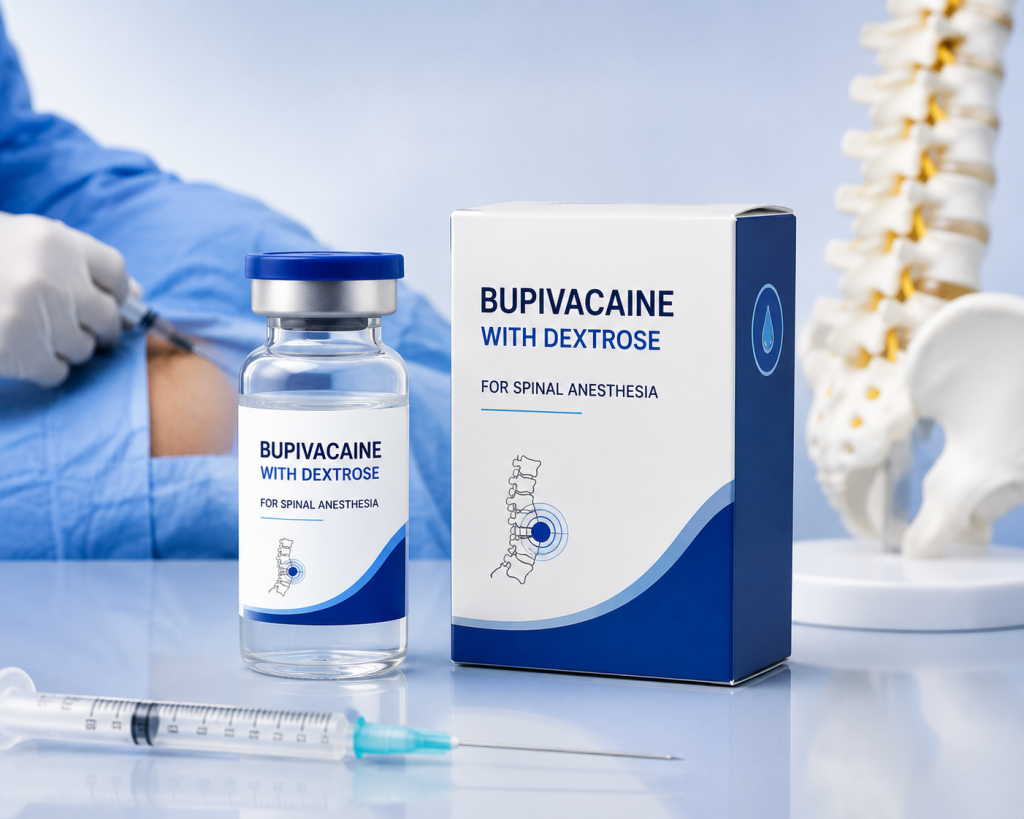
In the high-stakes environment of the operating theater, the choice of an anesthetic agent is a decision that balances the absolute necessity of patient safety with the surgical requirement for profound, reliable blockage. In 2026, the use of Bupivacaine with Dextrose—often referred to as “Hyperbaric Bupivacaine”—remains a cornerstone of spinal anesthesia. This specific formulation isn’t just about numbing the body; it is a masterclass in physics and physiology working in tandem. By adding dextrose to the bupivacaine, we change the solution’s density, giving the anesthesiologist a level of geographic control over the “numbness” that plain solutions simply cannot match.
The Physics of Baricity: Predictability in Action
The defining clinical advantage of Bupivacaine with Dextrose lies in its baricity. In the world of spinal anesthesia, baricity refers to the density of the anesthetic solution compared to the density of the human cerebrospinal fluid (CSF). Standard CSF has a specific gravity near 1.0003. By adding an 8.25% dextrose solution, the bupivacaine becomes “hyperbaric” (heavier than CSF).
When this “heavy” solution is injected into the subarachnoid space, it follows the laws of gravity. This allows the clinician to literally “steer” the anesthetic. If the patient is placed in a slight head-down (Trendelenburg) position, the medicine travels toward the thoracic region; if they are kept upright, it settles toward the sacral area. This predictability is the difference between a successful surgery and a stressful, patchy block. It ensures that the surgical site—whether it is an orthopedic procedure on the hip or a Cesarean section—is perfectly covered while minimizing the risk of the anesthetic “creeping” too high and affecting respiratory function.
Clinical Efficiency and Quality of Block
Beyond the control of its spread, Bupivacaine with Dextrose provides a quality of sensory and motor blockade that is remarkably robust. Because the dextrose increases the osmolarity of the solution, it may facilitate a more rapid onset of action. In a busy surgical ward in 2026, time is a precious commodity.
In the controlled quiet of the operating room, this anesthetic begins to work within minutes—usually creating a reliable, surgical-level block in just 5 to 8 minutes. As sensation fades, the muscles gently let go, giving the surgeon the stillness and relaxation needed to reach deeper tissues without resistance. What makes it truly dependable is its steady duration; for the next 2 to 3 hours it holds its effect, carrying patients safely through lower abdominal, gynecological, and lower-limb procedures with a calm, consistent presence.
Safety and the Cardiovascular Profile
One of the most human elements of anesthesia is managing the patient’s vitals during the procedure. High spinal anesthesia can often lead to a sudden drop in blood pressure (hypotension) due to the blockade of the sympathetic nervous system. Because hyperbaric bupivacaine is so predictable in its spread, anesthesiologists can more accurately target the specific dermatomes needed for the surgery, avoiding an unnecessarily high block that might compromise heart rate or vascular tone.
For decades, the simple addition of dextrose has quietly supported spinal anesthesia with a remarkable record of neurological safety. Today’s 2026 manufacturing standards take this reassurance even further—producing ultra-pure, carefully pH-balanced solutions designed to be gentle on neural tissues and to reduce the already small risk of transient neurological symptoms.
The Human Element: Recovery and Comfort
The journey doesn’t end when the surgeon finishes the last stitch. The recovery phase is where the choice of Bupivacaine with Dextrose truly shines for the patient. As the “heavy” solution gradually wears off, it does so in a predictable, bottom-up fashion. This allows for a smooth transition into post-operative pain management.
For the patient, this means the return of sensation and motor function follows a logical path, reducing the anxiety that can come from feeling “disconnected” from one’s lower body. For the nursing staff, the predictability of the block’s regression allows for better planning of when a patient can safely begin early mobilization—a key factor in preventing post-surgical complications like deep vein thrombosis (DVT).
Manufacturing and Purity in 2026
In 2026, we emphasize that the “vehicle” is just as important as the “active.” For a brand owner, ensuring that the dextrose used is of the highest parenteral grade is non-negotiable. The solution must be free of particulate matter and stored in glass ampoules or specialized polymer vials that prevent any leaching of contaminants. This level of purity ensures that when the clinician pulls that medicine into a syringe, they are holding a tool that has been refined by over half a century of clinical data and modern engineering.
Ultimately, Bupivacaine with Dextrose is more than just a chemical compound; it is a bridge that allows a patient to safely cross the threshold of surgery. It provides the surgeon with the “quiet” field they need and the patient with the pain-free experience they deserve, all while maintaining the highest standard of physiological control.