

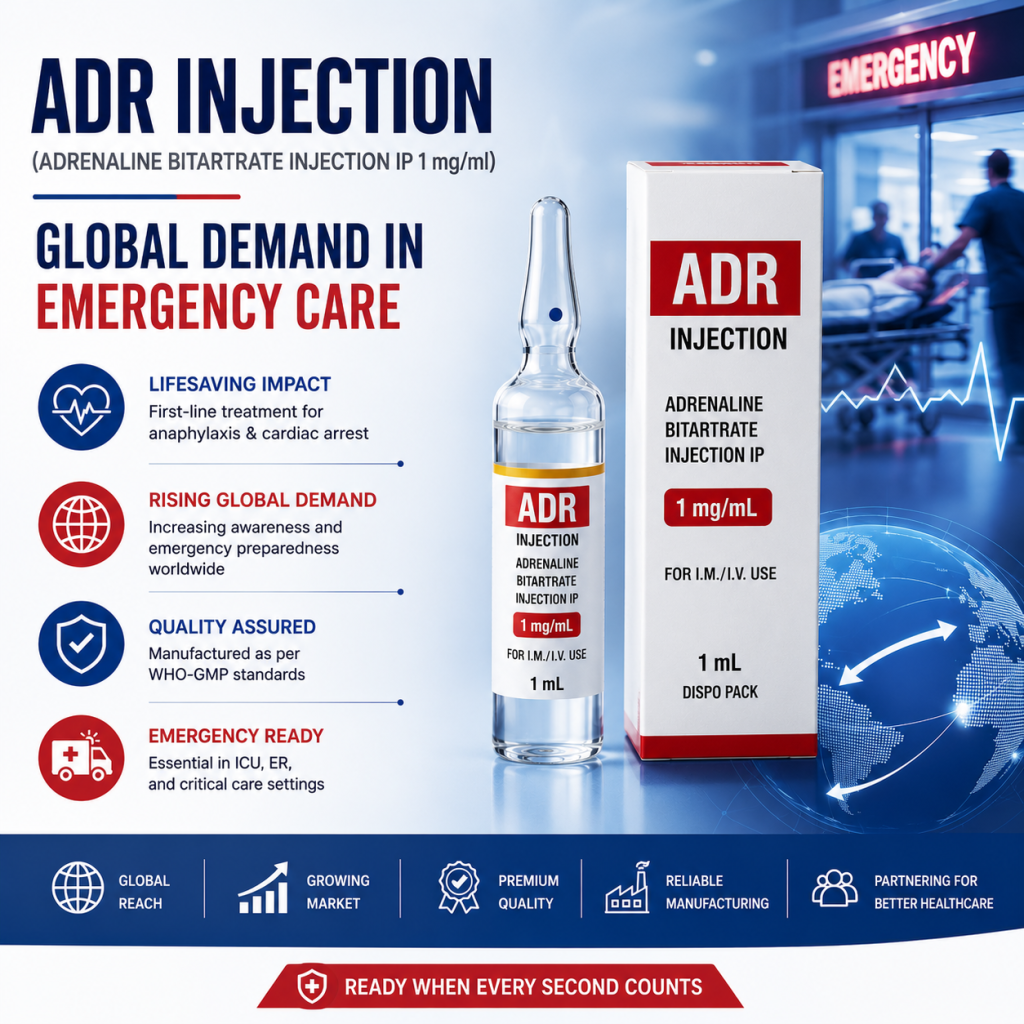
In an emergency room, time moves differently. Seconds feel heavier, decisions sharper, and outcomes often hinge on whether the right medicine is available at the exact right moment. Among the drugs that sit at the very heart of emergency care, ADR Injection, also known as Adrenaline Bitartrate Injection IP 1 mg/ml, holds a place of quiet importance. Across the world, hospitals, ambulances, and critical care units rely on a steady and dependable bulk supply of Adrenaline Bitartrate Injection, driving a strong and growing global demand that extends far beyond borders and healthcare systems.
Adrenaline has been used in emergency medicine for decades, yet its relevance has not diminished. In fact, with rising rates of cardiovascular disease, allergic reactions, trauma cases, and complications from chronic illnesses, the need for fast-acting emergency drugs has only increased.
This growing dependence has shaped global demand patterns. Developed healthcare systems require uninterrupted availability to support advanced emergency care infrastructure, while developing and emerging economies are rapidly expanding their emergency response capabilities. Governments are investing in better ambulance networks, trauma centers, and rural healthcare outreach, all of which require essential emergency medicines like Adrenaline Bitartrate Injection. As access to emergency care improves worldwide, the demand for high-quality, affordable adrenaline injections continues to rise, creating opportunities and responsibilities for manufacturers, bulk exporter networks, and third party supplier partnerships.
In emergency care, there is no margin for delay or disruption—hospitals and ambulances must have critical medicines on hand at all times. A single stock-out can mean the difference between rapid intervention and irreversible loss. Bulk procurement allows them to plan confidently, reduce last-minute shortages, and ensure that emergency protocols are never compromised by missing inventory. When every second matters, knowing that supply lines are stable brings quiet reassurance to medical teams on the front lines.
The most trusted bulk exporters understand that their responsibility goes beyond shipping vials from one place to another. Experienced manufacturers can give their full attention to what truly matters: strict regulatory compliance, sterile production environments, and precise formulation that performs reliably in emergency situations. At the same time, suppliers focus on ensuring smooth distribution, making sure these critical injections arrive where they are needed most, without delays or shortages. They help ensure that emergency care providers are not left waiting or forced to compromise. Instead, they receive trusted, IP-compliant Adrenaline Bitartrate Injection products that meet regulatory expectations and, more importantly, support clinicians when every second counts.
Quality remains a central concern in every discussion around Adrenaline Bitartrate Injection. Because the drug is used in critical, high-risk situations, there is no tolerance for variation or inconsistency. Buyers across the globe look for suppliers who adhere strictly to pharmacopeial standards, follow good manufacturing practices, and maintain transparent documentation.
Affordability is one of the most human factors influencing global demand. In emergency care, access should never depend on where someone lives or how much a system can spend. Yet many low- and middle-income countries work within tight healthcare budgets while still carrying the responsibility of being ready for life-threatening situations every day.
The COVID-19 pandemic changed more than protocols and policies—it reshaped how the world thinks about readiness. Even though adrenaline injections are not tied to treating infectious diseases, the crisis exposed just how vulnerable global medicine supply chains can be, and how dangerous shortages become when emergencies strike without warning. As a result, hospitals and government health authorities are placing greater importance on maintaining buffer stocks they can rely on in critical moments.
Ambulance services, disaster response teams, military medical units, and remote clinics all rely on adrenaline injections as part of their standard emergency kits. A child experiencing a sudden allergic reaction at school, a heart patient collapsing in a public place, a road accident victim fighting shock on the way to the hospital—these are the moments where availability decides outcomes.
Those who manufacture, export, and supply it carry a responsibility that goes beyond business. Behind every ampoule is the quiet hope that it will be there at the exact moment it is needed. That somewhere, in an ambulance, an emergency room, or a rural clinic, it helps a heart start beating again. It helps lungs draw in air. It gives families more time together when they need it most.