

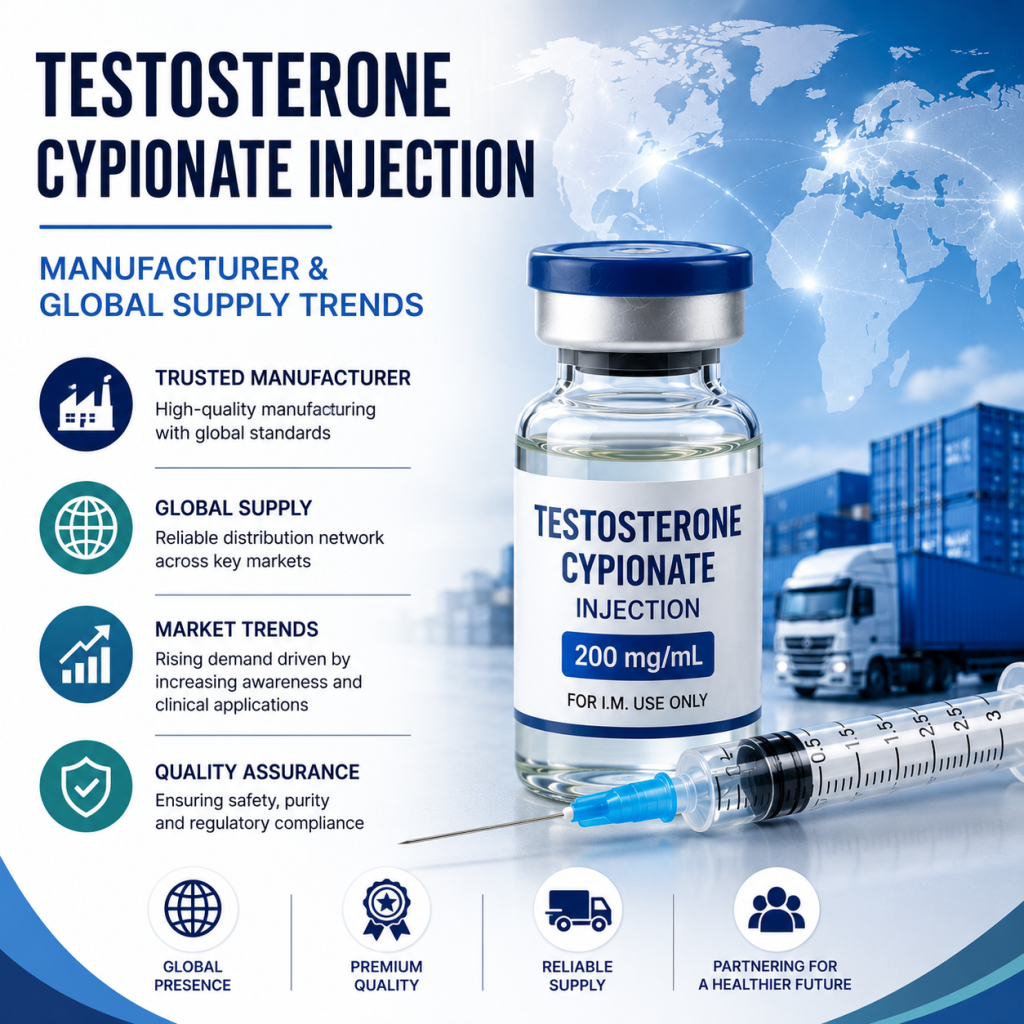
Understanding the Testosterone Cypionate Injection Manufacturer and Global Supply Trends is now a vital part of being an informed patient. We are seeing a move away from massive, opaque pharmaceutical conglomerates and toward a more transparent, “patient-first” supply chain that prioritizes consistency over sheer volume.
The Anatomy of Quality: API and Carrier Oils
To understand the supply chain, we have to look at the “ingredients.” Testosterone Cypionate is a compound of the base hormone and a slow-acting ester. The Active Pharmaceutical Ingredient (API) must be synthesized in facilities that meet rigorous 2026 global standards.
In the past, the “carrier oil”—the liquid that holds the hormone—was often an afterthought, usually cheap cottonseed oil. However, in 2026, leading manufacturers have listened to patient feedback. We are seeing a trend toward **MCT (Medium-Chain Triglyceride) and Grapeseed Oil (GSO). These oils are thinner, making the injection process less painful and reducing the risk of localized “PIP” (Post-Injection Pain). For the user, this manufacturing shift means that the “medicine” feels less like a harsh chemical and more like a refined biological tool.
Global Supply Trends: The Rise of Domestic Resilience
For years, the global supply of testosterone was vulnerable to “bottlenecks” in a few specific regions. In 2026, the trend is Decentralization. This isn’t just a logistical win; it’s a victory for the chemistry of the drug itself. Testosterone is incredibly sensitive to extreme temperature fluctuations during long-haul shipping. When a vial sits in a freezing cargo hold or a sweltering shipping container for weeks, the hormone can “crash” out of the carrier oil and form visible crystals.
Domestic resilience ensures that the vial you pick up at the pharmacy has spent less time in a shipping container and more time in a controlled, stable environment, preserving the integrity of the molecule.
The 2026 Manufacturing Standards
We have finally addressed the mechanical frustrations that patients have dealt with for decades, moving toward a standard of Multi-Dose Vial (MDV) Integrity.
One of the most significant shifts is the use of enhanced rubber stoppers engineered specifically to resist “coring.” In the past, repeated needle draws could cause tiny, microscopic pieces of rubber to break off and fall into the oil—a unsettling sight for any patient. These new medical-grade elastomers are “self-healing,” ensuring that even after a month of weekly draws, the seal remains pristine and the oil stays pure.
Beyond the vial itself, we now have the peace of mind provided by Cold-Chain Transparency. Because testosterone is so sensitive to the elements, manufacturers are now using real-time tracking sensors that follow the medication from the factory to the pharmacy shelf. If a shipment sits on a freezing loading dock or in a hot delivery truck for too long, the data is recorded. This ensures that the hormone you inject hasn’t lost its potency due to “molecular stress” caused by temperature swings.
The “Generic” Revolution: Quality Without the Premium
This is because “Authorized Generics”—where the original brand-name manufacturer produces the same formula under a different label—have stabilized the market. These manufacturers use the exact same API and carrier oils as the expensive brands, ensuring that cost is no longer a barrier to high-quality therapy.
For the patient, this means the focus has shifted from “Who made it?” to “How was it made?” We now look for manufacturers who utilize ISO 7 cleanroom standards and third-party batch testing. When you hold a vial in 2026, you aren’t just holding a drug; you’re holding a product of high-precision engineering that has been vetted through multiple layers of safety protocols.
Protecting the Patient’s Investment
The final link in the supply chain is the Pharmacist-Patient Interface. In 2026, manufacturers are providing more education on how to store and handle the medication. If your Testosterone Cypionate arrives looking “cloudy,” it’s often just a result of cold temperatures during transit causing crystallization. Understanding that you can gently warm the vial to “re-dissolve” the crystals—without damaging the hormone—is part of the 2026 empowered patient experience.
Ultimately, the trends in 2026 are about trust and transparency. As a man on TRT, you are an active participant in your health.